
Peer Support Network

Page Section Menu
Close
Expand

First Responder Peer Support Requests (call/text): 979-820-PEER (7337)

Texas Statewide Peer Support Network

First Responder Interagency Empathy Network & Disaster Response

Confidential. Voluntary. Peer to Peer Support.

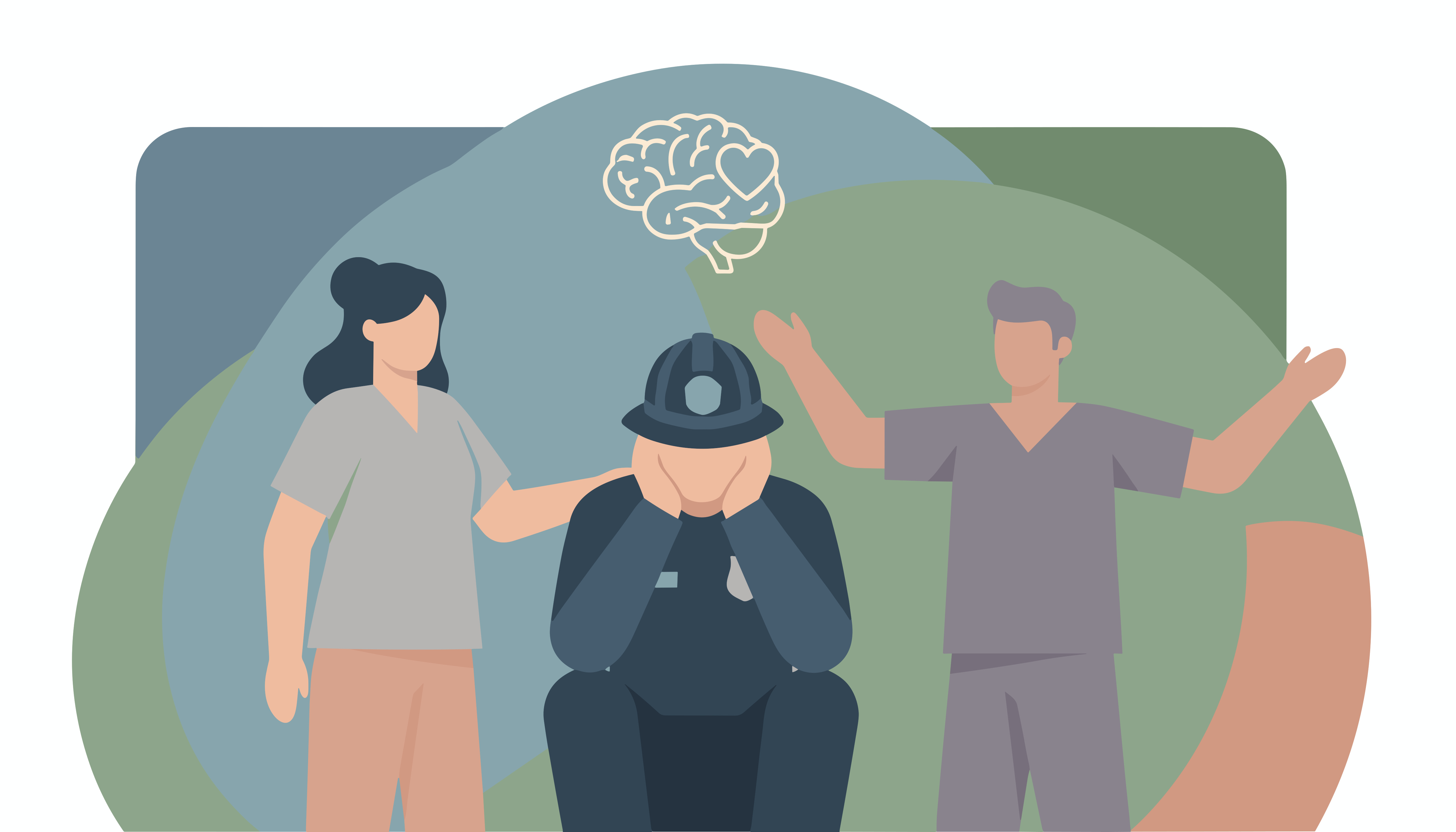
The Statewide Peer Support Program is a dedicated program for first responders where other specially trained first responders  provide peer to peer emotional support when an individual is experiencing stress, trauma or personal or work challenges either during their daily lives or after critical incidents that they were involved in.

Peer Supporters will provide: 

  • Emotional first aid
  • Education
  • Resource referrals

Peer support does not replace emergency services or professional mental health care!
Frequently Asked Questions

A call taker will answer the phone when the Peer Support line is contacted, basic information will be obtained, and an on-call Peer Supporter will be assigned to contact you as quickly as possible. When requesting peer support:

  • You may remain anonymous
  • Limited information is collected to connect you with support - call back number, location and immediate safety concerns
  • An on-call Peer Supporter will contact you at the phone number provided (please make sure you are able to accept phone calls from unknown phone numbers)

If there is an immediate risk of harm (active suicidal or homicidal thoughts with a plan), your exact location will be requested so that emergency services can be engaged to ensure your safety. A Peer Supporter will connect with you as well to serve as a liaison between you and emergency services and to ensure you get the help that you need.

  • Respond in a timely manner
  • Maintain confidentiality and professionalism
  • Provide emotional support, education and peer connection
  • Document only basic, non-clinical, non-diagnostic and non-identifiable information
  • Refer to higher levels of care when appropriate

To support the process, limited, non clinical and non identifiable information is documented once a Peer Supporter has completed a contact:

  • Method of request
  • Whether contact was made
  • Date, time and type of contact made
  • Approximate length of interaction
  • General areas of concern (e.g. work related stress, critical incidents, family concerns)
  • Outcome of support, including if referrals were made or resources provided

Information collected is:

  • Non-clinical, Peer Supporters are not a replacement for healthcare providers
  • Non-identifiable, remaining anonymous is an option
  • Not used for disciplinary purposes
  • Securely stored with restricted access

Limits of Confidentiality— Confidentiality may be broken only in the following dangerous situations:

  • Immediate risk of harm to self or others, including a plan to act - 911 will be contacted
  • Reasonable suspicion of elder/child abuse or neglect - must be reported to the Texas abuse hotline/website
  • Only the minimum necessary information will be shared to meet the requirements above.

Reports of substance use to a Peer Supporter will not be disclosed. The Peer Supporter will be required to refer the individual to a designated higher level of care if the substance use is determined to be dangerous to self or others or illegal in nature.

All information is stored in a secure, access controlled system (Smart Sheet) and contains only non-clinical and non-diagnostic information. All access is strictly limited:

  • The individual call taker who creates the record can only view the intake information they collected.
  • The assigned Peer Supporter can only access the record for documentation purposes. If a different Peer Supporter is assigned, the original Peer Supporter will lose access to the record. Once the record is closed, the Peer Supporter no longer has access.
  • The TDEM Statewide Peer Support Network Division Chief is the only individual with access to all records for program oversight. The Smart Sheet Administrator has access to all records to promote platform functionality and ongoing system improvements.

No additional leadership or staff have access to peer support records and all individuals with any level of access to records have signed individual confidentiality agreements. Peer Support records are protected and not subject to public information requests under applicable state law (House Bill 35).

This is a frequent question when in conversations surrounding Peer Support.

CISM, or Critical Incident Stress Management, is an intervention protocol developed specifically for dealing with critical incidents/traumatic events. CISM is a formal, highly structured, and professionally recognized process for helping individuals involved in a critical incident/traumatic event to share their experiences, vent emotions and learn about stress reactions in a group, debriefing type setting.

Peer Support is a more relaxed, one-on-one interaction that can focus on any stressor that the individual would like to discuss. These stressors can be work or personal life related, and not specific to one incident. The Peer Supporter provides an empathetic response, most likely having had shared experiences themselves of common stressors that individuals want to discuss.

Resources

This block contains the list with the content that will be added to the slider. You can hide this block if you want.
No items found.
No items found.

Incident Support Task Force Headquarters Team

Ken Bell
Ken Bell
Section Chief, Infrastructure Stabilization
Denise Treadwell
Denise Treadwell
Section Chief, Community Support
Courtney Goss
Courtney Goss
Section Chief, Voluntary Agency Liaison
Victor Magaña
Victor Magaña
Unit Chief, Mass Care
Brandon High
Brandon High
Unit Chief, Voluntary Agency Liaison
Samantha Fabian
Samantha Fabian
State of Texas Emergency Assistance Registry (STEAR) and Emergency Tracking Network (ETN) Program Manager
Danny Caldwell
Danny Caldwell
Texas Community Recovery System Program Manager
Jacob Martinez
Jacob Martinez
Program Specialist
Jennifer Edwards
Jennifer Edwards
Community Resource Liaison
Hannah Brittain Grote
Membership Recruitment Coordinator

Hannah Brittain Grote

Hannah.Grote@tdem.texas.gov
Hannah Brittain GroteHannah Brittain GroteHannah Brittain GroteHannah Brittain Grote
Ruddy Garmendez
Ruddy Garmendez
Texas Community Recovery System Program Specialist
Alex Rebolledo
Alex Rebolledo
Voluntary Agency Liaison Trainee
Jess Enriquez
Jess Enriquez
Executive Assistant
Hayley Albers
Hayley Albers
Community Preparedness Coordinator

ISTF Regional Personnel

Marcus Nerios
Marcus Nerios
Region 1 Voluntary Agency Liaison
Travis Ward
Travis Ward
Region 1 ISTF Coordinator
Theresa West
Theresa West
Region 1 Disaster Finance Coordinator
Samantha Smith
Samantha Smith
Region 2 Voluntary Agency Liaison
Victoria Garner
Victoria Garner
Region 2 ISTF Coordinator
Julie Rowell
Julie Rowell
Region 2 Disaster Finance Coordinator
Emmitt Eldridge
Emmitt Eldridge
Region 3 Voluntary Agency Liaison
Sean Henninger
Sean Henninger
Region 3 ISTF Coordinator
Daniel Gaytan
Daniel Gaytan
Region 3 Disaster Finance Coordinator
Angela Young
Angela Young
Region 4 Voluntary Agency Liaison
Daniel Birch
Daniel Birch
Region 4 ISTF Coordinator
Rachel Wolfe
Rachel Wolfe
Region 4 Disaster Finance Coordinator
Ashley Roush
Ashley Roush
Region 5 Voluntary Agency Liaison
Aaron Alvarez
Aaron Alvarez
Region 5 ISTF Coordinator

Aaron Alvarez is the Incident Support Task Force Coordinator for TDEM Region 5. He previously served as Executive Aide, working closely with the Media, Communications, and Preparedness teams and agency leadership to support public engagements and events across the state. He originally joined TDEM as Advance Representative.

Aaron is a graduate of the inaugural Texas Emergency Management Academy, where he received his FEMA National Emergency Management Basic Academy Certificate of Completion as well as NREMT Emergency Medical Technician Basic Certification. The Academy provided him with over 1,400 hours of instruction, training, and knowledge in a variety of aspects of emergency management, including the fields of emergency preparedness, disaster response, recovery, and hazard mitigation.

After graduating high school and attending college, Aaron worked as a project manager for a general contracting company in Austin, TX. During his free time, he spent many hours volunteering for the local Fire Department and learning about Fire and Emergency Services.

Aaron AlvarezAaron AlvarezAaron AlvarezAaron Alvarez
Nancy Cuellar
Nancy Cuellar
Region 5 Disaster Finance Coordinator
Jacob Zamorano
Jacob Zamorano
Region 6 Voluntary Agency Liaison
Jonathan Esquivel
Jonathan Esquivel
Region 6 ISTF Coordinator
Angel Carvajal
Angel Carvajal
Region 6 Disaster Finance Coordinator
Luis Trejo
Luis Trejo
Region 7 Voluntary Agency Liaison
Erica Cordero
Erica Cordero
Region 7 ISTF Coordinator
Michael Diaz
Michael Diaz
Region 7 Disaster Finance Coordinator
Jeffrey Pearce
Jeffrey Pearce
Region 8 Voluntary Agency Liaison
Lauren Serrato
Lauren Serrato
Region 8 ISTF Coordinator
David Williams
David Williams
Region 8 Disaster Finance Coordinator
All Regions Map
No items found.
No items found.

Additional Information

No items found.

STEAR Forms and Documentation

No items found.